
Choosing the right Glass Bottle Glass Stopper manufacturer in 2026 requires more than comparing glossy catalogs. It demands careful attention to materials, production control, closure performance, and verified customer experience.
This guide examines manufacturers that serve beverage, food, cosmetic, pharmaceutical, and specialty packaging markets. It considers borosilicate and soda-lime glass options, stopper fit, sealing consistency, surface finishing, and customization capacity. A well-made stopper should sit smoothly, resist chipping, and protect the bottle’s contents during storage and transport.
Small details matter.
For example, a stopper with uneven grinding may leave a visible gap around the neck. That gap can affect presentation and closure reliability. Experienced manufacturers usually provide dimensional drawings, sample testing, quality records, and clear tolerances before mass production begins. Their technical teams should also explain how annealing, polishing, inspection, and packaging reduce breakage risks.
Still, no ranking is perfect. Supplier performance can change with order volume, material availability, equipment upgrades, and regional logistics. Some manufacturers appear highly capable but offer limited after-sales support. Others may have excellent craftsmanship yet struggle with large, repeat orders.
This overview therefore focuses on practical evidence, not advertising claims. It highlights manufacturing experience, transparent communication, product consistency, customization services, and responsible quality management. Buyers should confirm certifications, request physical samples, and test closures under real storage conditions. A beautiful sample proves little alone. Careful verification remains essential when selecting a reliable Glass Bottle Glass Stopper partner for 2026.
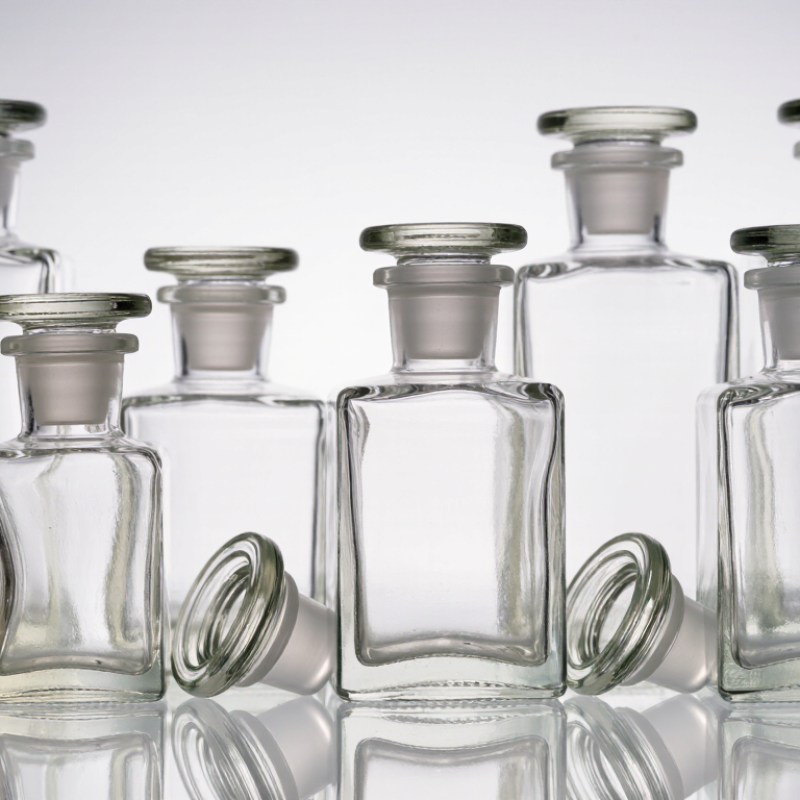
A glass bottle glass stopper manufacturer designs and produces glass closures that fit bottle necks. It may supply standard stoppers or develop dimensions for a specific container. The work combines glass formulation, mold engineering, grinding, polishing, and inspection. The goal is simple: a secure fit, clean appearance, and consistent performance. Small details matter. A stopper that looks smooth may still leak if its contact surface is uneven.
Reliable manufacturers begin with drawings, neck measurements, and intended storage conditions. They select suitable glass, shape prototypes, and check each stopper against the bottle. Experienced technicians inspect chips, cracks, bubbles, dimensions, and surface finish. They may use gauges, visual checks, and controlled sealing tests. Traceable batch records connect defects with materials, equipment, and process changes. That discipline supports repeatable supply.
Quality is not only about appearance. A good supplier explains tolerances, packaging methods, lead times, and inspection limits before production. Protective separators reduce scratches during transport, while clean storage preserves the finished surface. Customization is possible, but unnecessary complexity can raise costs and create more failure points. This is where practical judgment matters. No process is flawless; even an approved sample deserves review after production begins. Manufacturers that document corrections openly are often more dependable than those promising perfection.
Designing a glass bottle and stopper begins with the product’s purpose, filling method, and user experience. Engineers define the bottle volume, neck finish, wall thickness, and base strength before creating detailed drawings. A wider shoulder may improve pouring, while a heavier base can increase stability on retail shelves. Shape matters, but performance matters more.
Molten glass is formed in precision molds at extremely high temperatures. Controlled cooling reduces internal stress and helps prevent sudden cracking. Quality teams inspect dimensions, surface marks, color consistency, and pressure resistance. Automated cameras detect tiny defects, although human review remains useful for unusual scratches or uneven edges. The process is not perfectly predictable. Small temperature changes can still affect results.
Glass stoppers require equally careful engineering. Their sealing surface must match the bottle neck with controlled clearance. Designers may use solid glass, natural materials, or engineered sealing components, depending on the application and regulatory requirements. Each stopper is polished, measured, and tested for fit, removal force, and leakage resistance. Production teams should also check repeated opening and closing, because a stopper that works once may perform poorly after regular use. Better manufacturers document these tests and adjust molds when evidence reveals weak points.
| Production Stage | Design or Material Dimension | Typical Industry Practice | Performance Purpose | Common Quality Check |
|---|---|---|---|---|
| 1. Product Brief | Bottle application | Common applications include spirits, wine, cosmetics, food, laboratory products, and pharmaceuticals. | Defines the required chemical resistance, closure system, light protection, appearance, and filling conditions. | Approved product specification, drawings, and intended-use review. |
| 2. Glass Selection | Glass type | Soda-lime-silicate glass is widely used for general bottles; borosilicate glass is selected when higher thermal and chemical resistance is required. | Controls durability, thermal-shock resistance, chemical stability, and production cost. | Chemical composition review, hydrolytic-resistance testing, and thermal-shock testing where applicable. |
| 3. Bottle Design | Wall distribution and geometry | Computer-aided design is used to balance wall thickness, shoulder shape, base strength, neck finish, and overall weight. | Reduces stress concentration, improves impact resistance, and supports stable forming and filling. | Dimensional inspection, wall-thickness mapping, vertical-load testing, and impact testing. |
| 4. Raw Materials | Batch composition and cullet | Silica sand, soda ash, limestone, selected refining agents, colorants, and recycled glass cullet are proportioned before melting. | Supports consistent color, melting behavior, glass quality, and energy efficiency. | Incoming-material inspection, batch weighing, moisture control, and color analysis. |
| 5. Melting | Furnace process | The batch is melted at approximately 1,400–1,600°C, depending on the glass formulation and furnace process. | Produces a homogeneous glass melt with controlled viscosity and limited inclusions. | Temperature monitoring, visual inspection, viscosity control, and checks for stones, cords, and bubbles. |
| 6. Bottle Forming | Forming method | High-volume containers are commonly made using press-and-blow or blow-and-blow forming in precision molds. | Creates the bottle profile, neck finish, base, and internal volume at production speed. | Automated dimensional inspection, weight checks, finish gauges, and visual defect detection. |
| 7. Annealing | Internal stress relief | Formed bottles pass through an annealing lehr, where they are reheated and cooled under controlled conditions. | Reduces residual stress and lowers the risk of cracking during handling or temperature changes. | Polariscopic stress inspection and thermal-shock performance testing. |
| 8. Stopper Design | Glass stopper geometry | A stopper normally includes a grip or head, a tapered sealing section, and a defined insertion depth matched to the bottle neck. | Provides repeatable insertion, removal, sealing, and compatibility with the bottle finish. | Dimensional measurement, taper-angle inspection, insertion-depth testing, and fit verification. |
| 9. Stopper Production | Manufacturing route | Glass stoppers may be produced by pressing, machining, grinding, polishing, or a combination of these processes, depending on design and volume. | Achieves the required surface finish, dimensional accuracy, transparency, and sealing consistency. | Surface-finish inspection, dimensional tolerances, edge inspection, and crack detection. |
| 10. Sealing System | Glass-to-glass fit or gasket | Closures may rely on a precision glass fit or use a compatible elastomer, polymer, or other sealing component. | Controls leakage, evaporation, oxygen ingress, and product-contact compatibility. | Leak testing, torque or extraction-force testing, seal integrity testing, and compatibility assessment. |
| 11. Surface Decoration | Color and finish | Typical options include clear, amber, green, flint, frosted, coated, printed, or chemically treated surfaces. | Improves light protection, shelf appearance, handling characteristics, and product differentiation. | Color measurement, coating adhesion, abrasion resistance, and print-registration inspection. |
| 12. Final Inspection | Compliance and release criteria | Finished bottles and stoppers are checked against approved drawings, agreed tolerances, packaging requirements, and applicable food-contact or pharmaceutical requirements. | Ensures consistent fit, safe handling, reliable sealing, and traceable delivery quality. | Sampling plans, batch records, certificate review, visual inspection, and traceability checks. |
In 2026, a top glass bottle glass stopper manufacturer must prove performance beyond attractive samples. The stopper should fit the bottle neck smoothly, without wobbling, sticking, or visible gaps. Experienced teams measure neck dimensions and closure tolerances during production. They also inspect sealing surfaces under controlled lighting. Small defects can cause leakage, breakage, or customer complaints.
Material control defines professional manufacturing. Reliable factories document glass composition, batch numbers, and production conditions. They test thermal shock, surface strength, and repeated opening performance.
Clear inspection records matter more than confident sales claims. Independent laboratory testing can strengthen technical credibility. However, test results should match real production batches, not selected samples. This point is often overlooked.
A strong manufacturer also communicates honestly about capacity, lead times, tooling costs, and possible defects. Detailed drawings, pilot samples, and written approval procedures reduce costly misunderstandings. Food-contact requirements and regional compliance documents should be current and traceable. Sustainability deserves practical evidence, such as energy monitoring, waste reduction, and responsible packaging. No factory is flawless. Even skilled teams may face color variation or delayed shipments. What matters is the response: identify the cause, report it clearly, and correct it quickly. Regular customer feedback should change the process, not merely fill a report. Reliable partnership is built through measurable quality and consistent communication.
When comparing leading glass bottle stopper manufacturers in 2026, start with measurable performance, not attractive catalogs. Check the glass type, wall thickness, stopper dimensions, and surface finish. A precise fit reduces leakage, chips, and unwanted movement during transport. Ask for samples from different production batches. One sample can look perfect.
Review the manufacturer’s quality system, inspection records, and testing methods. Reliable suppliers should explain how they control dimensions, visual defects, thermal resistance, and closure compatibility. Confirm production capacity, minimum order quantities, lead times, and packaging protection. Technical communication matters too. Vague answers may signal weak process control. Price deserves attention, but the lowest quotation can hide higher rejection rates or replacement costs. Sustainability claims also need evidence, such as recycled-content data or energy records. I would not accept broad promises without documentation. A small weakness in our comparison process can distort the final decision.
Tips: Build a comparison sheet with ten criteria and score each supplier consistently. Include sample quality, tolerance control, testing evidence, delivery reliability, communication, and total cost. Request a written corrective-action process for defects. Visit the facility when practical, or arrange a live production audit. Check how cartons are sealed and separated; tiny scratches often begin there. Leave space for uncertainty. Early evaluations are useful, but they are not final proof.
Glass bottles with glass stoppers serve industries that value product protection, presentation, and material stability. Premium food producers use them for oils, vinegars, syrups, sauces, and specialty preserves. Glass helps resist odor transfer and supports clear visual inspection. The stopper also gives the package a solid, tactile feel. The fit matters.
Personal care and fragrance companies use glass stopper bottles for perfumes, serums, essential-oil blends, and concentrated treatments. These products often need controlled dispensing and strong resistance to chemical interaction. Packaging teams check the stopper’s dimensions, surface finish, and sealing performance before production. A beautiful bottle is not enough.
Laboratories and pharmaceutical manufacturers may select glass bottles for samples, reagents, and sensitive formulations. They usually evaluate closure compatibility, cleanliness, extractables, and storage conditions. Food-contact and medical packaging requirements can differ by market, so technical documentation remains essential. Quality inspectors also test leakage after transport, vibration, and temperature changes.
Hospitality businesses use these bottles for table condiments, tasting oils, and room amenities. Refillable systems can reduce disposable packaging, but cleaning procedures must be consistent. Residue around the stopper can create hygiene problems. Looks can mislead.
From a manufacturing perspective, glass stoppers require careful control of grinding tolerance and neck dimensions. Minor variation may cause leakage or make removal difficult. This is where practical testing matters more than catalog photography. Some designs still favor appearance over easy handling, and that choice deserves reconsideration. A reliable supplier should provide inspection records, material information, and samples for real-world trials.
It designs and produces glass closures that fit bottle necks. The work includes molding, grinding, polishing, and inspection. Fit matters.
Engineers use neck measurements, technical drawings, and intended storage conditions. They compare prototypes with the actual bottle. An attractive stopper may still leak.
Inspectors check chips, cracks, bubbles, dimensions, and surface finish. They may use gauges, cameras, visual reviews, and sealing tests. Human inspection still helps.
Molten glass enters precision molds at extremely high temperatures. Controlled cooling reduces internal stress and sudden cracking. Small temperature changes can affect results.
Testing should include fit, removal force, leakage resistance, and repeated opening. A stopper can work once and fail later. That weakness is easy to miss.
Compare glass type, wall thickness, stopper dimensions, tolerances, and surface finish. Also review samples from several production batches. One sample misleads.
The supplier should explain tolerances, packaging, lead times, inspection limits, and order quantities. Clear technical answers suggest stronger process control. Vague answers deserve caution.
Protective separators help prevent scratches during transportation. Clean, dry storage preserves polished surfaces. Tiny scratches often begin inside cartons.
Not necessarily. A low price may hide higher rejection, replacement, or delay costs. Evaluate total cost and documented performance. The cheapest option may disappoint.
No. Production conditions can change after sample approval. Review early batches and request corrective-action records for defects. Our judgment can still be imperfect.
A Glass Bottle Glass Stopper manufacturer specializes in designing and producing coordinated glass containers and precision-fit glass closures for products that require reliable sealing, attractive presentation, and consistent quality. The process typically includes concept development, mold design, glass formulation, forming, stopper shaping, surface finishing, inspection, and packaging. Successful manufacturers balance visual appeal with practical performance, ensuring that bottles and stoppers fit securely, withstand normal handling, and maintain consistent dimensions across large production runs.
In 2026, leading manufacturers are defined by advanced production technology, strict quality control, flexible customization, responsible material use, and dependable delivery capacity. When comparing suppliers, buyers should evaluate design support, closure compatibility, testing standards, production scalability, sustainability practices, communication, and total cost rather than focusing only on appearance or price. Glass bottles with glass stoppers are widely used in fragrance, cosmetics, food and beverage, household products, hospitality, and decorative packaging. The best manufacturer can provide a complete, coordinated solution that strengthens product identity while meeting functional and industry-specific requirements.
